Vistas a la página totales

martes, 7 de abril de 2020

Children 2 - End of Unit 1 - Part C

REVIEW - WRITING
(Repaso - Escritura)

Look at pictures A and B. Find 5 differences and write them down 
(Mira las figuras A y B. Encuentra 5 diferencias y escríbelas)


I will help you with one difference... (Te ayudaré con una diferencia...)

PICTURE A                                                                   PICTURE B

1. The teacher is drawing on the board.                         The teacher is writing numbers on the board.
2.
3.
4.
5.

Puedes escribir: 
The children are... / The boy is... / The girl is... / The boys are... / The girls are...


Children 2, End of Unit 1 - Part B

REVIEW - VOCABULARY AND GRAMMAR 
(Repaso - Vocabulario y Gramática)

Please, do exercises 25 and 26 (por favor, haz los ejercicios 25 y 26)


PAY ATTENTION!
                                  To complete exercise 25, pay attention to the form you have to write the verb, for example, color or coloring? read or reading, etc.

(Para completar el ejercicio 25, presta atención a la forma en que debes escribir el verbo, por ejemplo, pintar o pintando? leer o leyendo?, etc. 


Children 2 - End of Unit 1, Part A

LET´S REVIEW THE USE OF "THERE IS" AND "THERE ARE"
(Repasemos el uso de "There is" y "There are")

The question:
                            HOW MANY (BOOKS) ARE THERE?

"Books" está entre paréntesis porque allí podemos preguntar por muchas otras cosas, como por ejemplo: chairs, teachers, tables, cellphones, computers, classrooms, etc. 

The answer:
                            THERE´S ONE (BOOK) 

Recordemos que: THERE´S = THERE IS y que "book" está entre paréntesis porque puedo incluir la palabra en la respuesta o no. Esto es, podemos responder: "There is one", o "There is one book". Utilizamos estas respuestas cuando sólo hay un elemento.

                             O BIEN...

                             THERE ARE (THREE) BOOKS

Cuando hay más de un elemento, así sean dos o dos mil, utilizamos "There are". El número "three" está entre paréntesis porque dependerá de la cantidad de libros que haya. Al igual que la respuesta anterior, podemos decir "There are three", o bien, "There are three books".


LET´S PRACTICE NOW! 
(Ahora, practiquemos!)

Look at the picture and answer the questions ("Mira la figura y responde las preguntas")


1. How many children are there?
2. How many computers are there?
3. How many doors are there?

Now, please add two elements to the picture and ask about them. For example, you can draw a teacher and then ask: How many teachers are there? 

(Ahora, por favor agrega dos elements a la figura y pregunta sober ellos. Por ejemplo, puedes dibujar una maestra y luego preguntar: ¿cuántas maestras hay?)




lunes, 6 de abril de 2020

Teens Intermediate - End of Unit 1, Part C

HOMEWORK

1. Please, complete the exercise about Past Progressive and the Simple Past tenses.

Put the verbs into the correct tense (simple past or past progressive).
  1. When I (do)  the washing-up, I (break)  a plate.
  2. While Tom (play)  the piano, his mother (do)  the washing-up.
  3. He (drink)  some juice and then he (eat)  a few chips.
  4. (have)  dinner when I suddenly (hear)  a loud bang.
  5. When my father (work)  in the garden, an old friend (pass)  by to see him.
  6. She (go)  to school, (take)  out her textbook and (begin)  to learn.
  7. When it (start)  to rain, our dog (want)  to come inside.
  8. When Jane (do)  a language course in Ireland, she (visit)  Blarney Castle.
  9. When I (be)  on my way home, I (see)  an accident.
  10. (not / understand)  what they (talk)  about.


Teens Intermediate - End of Unit 1, Part B

HOMEWORK

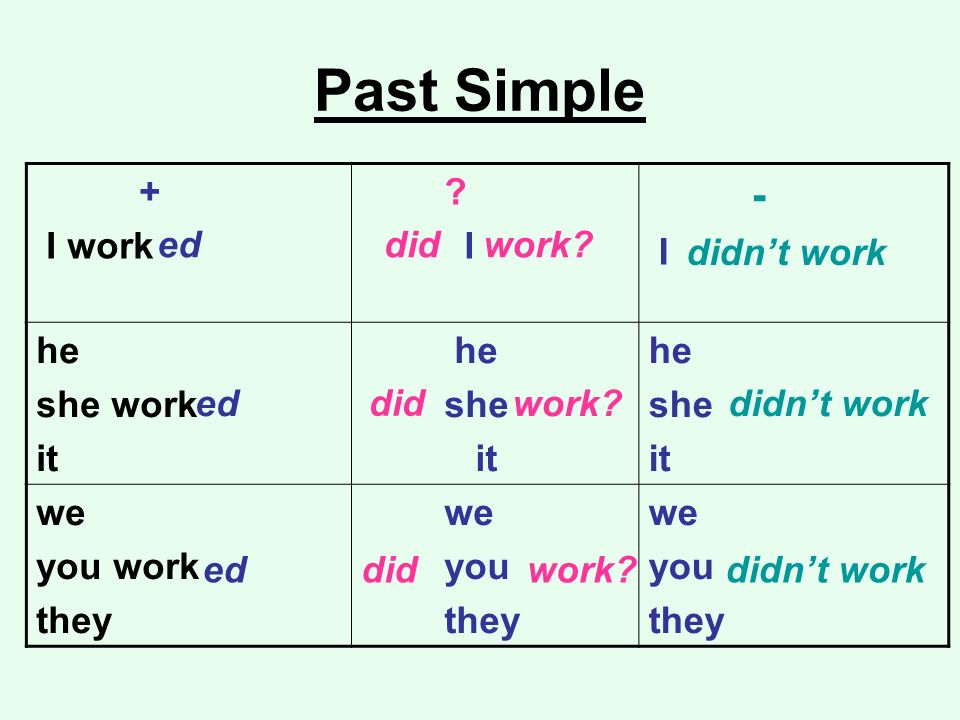
1. Please, read the information below about the Past Simple tense.

The simple past expresses an action in the past taking place once, never, several times. It can also be used for actions taking place one after another or in the middle of another action.

Form


 PositiveNegativeQuestion

I spoke.I did not speak.Did I speak?
Take a look at this chart:


Signal Words of Simple Past
  • yesterday, ago, in (1990), the other day, last Friday

2. Now, complete these exercises:

Put the verbs into the correct form (simple past).
  1. Last year I (spend)  my holiday in Ireland.
  2. It (be)  great.
  3. (travel)  around by car with two friends and we (visit)  lots of interesting places.
  4. In the evenings we usually (go)  to a pub.
  5. One night we even (learn)  some Irish dances.
  6. We (be)  very lucky with the weather.
  7. It (not / rain)  a lot.
  8. But we (see)  some beautiful rainbows.
  9. Where (spend / you)  your last holiday?
Form questions in Simple Past.
  1. we / in London / live
    → 
  2. I / magazines / read
    → 
  3. we / her / an apple / give
    → 
  4. Janet / the bus / miss
    → 
  5. Vanessa / the ball / catch
    → 
  6. he / his father / embarrass
    → 


Teens Intermediate - End of Unit 1, Part A

HOMEWORK

1. Language Wrap Up - Page 18, all the page.

2. Please, read the information below about the Past Progressive tense.

The past progressive puts emphasis on the course of action in the past.

Form

PositiveNegativeQuestion
I / he / she / itI was speaking.I was not speaking.Was I speaking?
you / we / theyYou were speaking.You were not speaking.Were you speaking?

Use of Past Progressive

  • puts emphasis on the course of an action in the past
    Example: He was playing football.
  • two actions happening at the same time (in the past)
    Example: While she was preparing dinner, he was washing the dishes.
  • action going on at a certain time in the past
    Example: When I was having breakfast, the phone suddenly rang.

Signal Words of Past Progressive

  • while, as long as
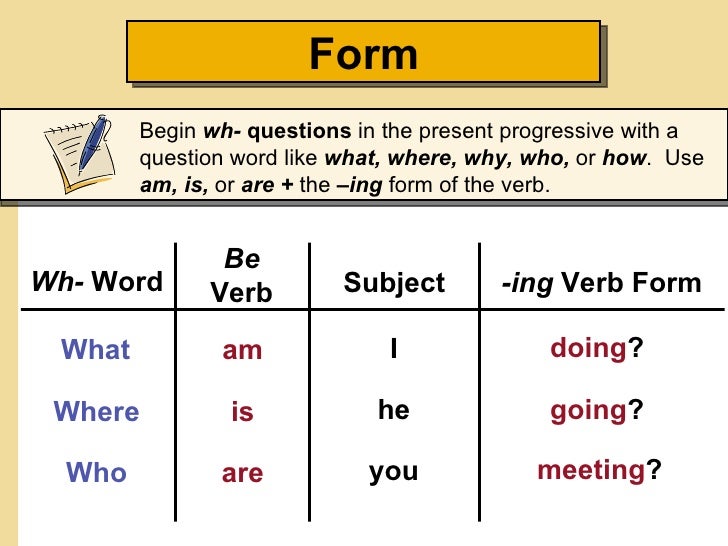
Past Progressive with Question words:


Now, complete the following exercises:

Was or Were?

  1. The pirates  fighting for the treasure.
  2. We  discussing the problem.
  3. The candle  burning.
  4. The cat  chasing the mice.
  5. The mice  running away from the cat.

Write sentences in past progressive.

  1. the snowman / melt / in the sun → 
  2. we / explore / a new territory → 
  3. the secretary / print out / a document → 
  4. the girls / not / concentrate / on the task → 
  5. Garth / not / practise / on the piano → 

Write questions in past progressive.

  1. Jill / dance → 
  2. your cousins / swim / in the lake → 
  3. the student / answer / a question → 
  4. William / play / the guitar → 
  5. Janet / sit / on the bench → 


domingo, 5 de abril de 2020

Children 1 - End of Unit 1 - PART D

1. LET´S FIND THE DIFFERENCES! 
(Encontremos las diferencias!)

Look at the pictures. Using THERE IS and THERE ARE try to find seven differences. 
Come on! You can do it!
(Mira las figuras. Usando THERE IS y THERE ARE intenta encontrar siete diferencias. Vamos! Tú puedes!)


I will help you with one difference so there are still six!...
(Te ayudaré con una diferencia pro lo que aún quedan seis!)

Picture A                                                 Picture B

1. There is one red backpack.               1. There is one blue backpack.
2.                                                              2.
3.                                                              3.
4.                                                              4.
5.                                                              5.
6.                                                              6.
7.                                                              7.


Children 1 - End of Unit 1 - PART C

1. LET´S STUDY THE ALPHABET !
(Estudiemos el abecedario!)

Te propongo ver el siguiente video para escuchar y ver cómo debemos pronunciar las letras del abecedario en inglés. Good luck! (Buena suerte!)


2.  LET´S SEE SOME "MAGIC WORDS"
(Veamos algunas "palabras mágicas")

                PLEASE                                   THANK YOU                                  YOU´RE WELCOME

                                          EXCUSE ME                                          SORRY

Te propongo que busques lo que significa cada una y lo escribas en tu cuaderno. Tú puedes! (puedes escribir su significado en español)


Children 1 - End of Unit 1 PARTS A - B

PART A

1. Let´s remember the numbers 1 - 10 and see how we have to write them 
(Recordemos los números del 1 - 10 y veamos cómo tenemos que escribirlos)


2. Now, let´s watch a video to learn how to pronounce each number
(Ahora, veamos un video para aprender cómo pronunciar cada número)


PART B

3. Please, count and color 
(Por favor, cuenta y colorea)


COLOR:

Two blue chairs
Three yellow books
Four red crayons
One green backpack